
BUSH SPORTS TURF Clientele
Bush Sports Turf proudly serves professional fields, colleges, K–12 schools, municipalities, clubs, turf managers, business owners, & parks and rec organizations.
Baseball Fields
Football Fields
Soccer Fields
Golf Courses
Sport Complex Athletic Fields
Parks & Rec Practice Fields
Commercial Landscaping
Why Bush Sports Turf for Football
- 30+ years building and renovating football fields across the Midwest — agronomist on staff and Certified Sports Field Manager (CSFM).
- Turnkey services: site evaluation, geotechnical review, base & drainage design, shock pad options, turf or sod installation, field markings/inlays, and O&M contracts.
- Procurement-ready: public bid/RFP support, pre‑bid site visits, test reporting, bonding and insurance documentation for schools and municipalities.
- Local presence in IL, IN, IA, MI, MN, MO & WI with rapid service response and Midwest climate experience.
Solutions by level — NFL, College, K–12 & Parks & Rec
NFL / Pro
Custom specifications to meet league and stadium standards: performance tolerance for ball roll, traction, drainage and sightlines. We coordinate with stadium crews and consultants as needed and provide rapid turnaround for postseason/event recovery plans.
College
Systems tuned for heavy practice loads and multi-use scheduling, with documentation that supports athletic department procurement and conference standards.
K–12 / Youth / Community
Safer, cost‑effective systems focused on Gmax targets, simplified maintenance plans, and options that fit public procurement budgets and grants.
Parks & Rec
Designed for maximum resiliency and multi‑activity use, ADA access, vandal‑resistant options, and maintenance contracts that work with park staff schedules and municipal procurement rules.
Natural grass vs. Football turf — short comparison
| Feature | Natural Sod (Premium) | Hybrid (Sod outfield / Turf infield or reinforced sod) | Full Synthetic Turf (infield or full field) |
|---|---|---|---|
| Upfront cost | Low–Moderate | Moderate–High | High |
| 10–15 year lifecycle cost (TCO) | High — ongoing irrigation, renovation, and labor | Moderate — fewer daily costs than all‑sod; periodic hybrid repairs | Low–Moderate — higher upfront, fewer weather cancellations and lower daily maintenance |
| Maintenance demands | High — mowing, irrigation, aeration, pest/disease care, frequent repairs | Moderate — mix of turf & sod tasks; targeted repairs where needed | Low–Moderate — brushing/grooming, infill top‑ups, seam inspection, annual testing |
| Playability & ball/foot behavior | Traditional feel; preferred for authenticity and cooler surface | Closest to natural in play; engineered transitions required for consistent behavior | Engineered consistency; customizable ball roll/traction; different feel than sod |
| Weather resilience & recovery time | Poor–Moderate — slow after heavy rain or spring thaw; likely closures | Improved — turf in high‑use zones speeds recovery; sod still vulnerable | Excellent — rapid drainage & quick return to play when designed for Midwest conditions |
| Scheduling flexibility (approx. usable hrs/week) | ~20–40 hrs/week (site & climate dependent) | ~40–80 hrs/week | ~60–120+ hrs/week (tournament/high‑use ready) |
| Ideal clients | Traditional venues, high‑end stadiums, owners prioritizing natural field feel | Colleges, multi‑use parks, venues wanting a balance of feel and durability | K–12, Parks & Rec, heavy‑use tournament fields, many colleges seeking low downtime |
Performance specs & safety
Typical design targets we use for football fields:
- Pile height: 1.5″–2.5″ (varies by system and desired ball behavior).
- Face weight: 40–80 oz/yd² depending on wear expectations and budget.
- Drainage: engineered aggregate base with high-permeability backing; systems designed to move spring melt and heavy stormwater quickly to minimize downtime.
- Shock attenuation / Gmax: we design and maintain fields to industry safety guidance (commonly under more conservative owner targets than the ASTM upper limit) and perform annual testing per ASTM methods and STMA best practices. For testing and safety guidance see ASTM and STMA resources. (standards.iteh.ai)
- Lifespan: modern football systems typically perform 8–15+ years, depending on use and maintenance; we provide lifecycle cost modeling (10–15 year TCO) in every proposal. (Research on field aging, infill compaction and hardness supports annual testing & maintenance schedules.) (pure.psu.edu)
Installation process — turnkey, Midwest‑tested
- Pre‑construction: geotechnical review, grading & drainage plan, permitting support.
- Base construction: crushed aggregate subbase, laser grading, tile drainage as required.
- Shock pad (optional): polyurethane or in‑fill pad choices to reduce Gmax and extend turf life.
- Turf install: seam welding / high-strength seaming, inlaid or non‑inlaid markings, goal post anchors and warning tracks.
- QA & testing: post‑install Gmax testing, infiltration/permeability checks, and ball roll/traction checks. We deliver test reports for RFP/owner review. (ASTM and Penn State research outline test methods and recommended testing frequency.) (standards.iteh.ai)
Maintenance & O&M contracts
Typical maintenance tasks we include in O&M contracts:
- Regular brushing and grooming to restore pile verticality and redistribute infill.
- Infill monitoring and top‑ups to maintain consistent shock attenuation.
- Seam and line inspections and repairs.
- Surface cleaning and disinfecting as needed.
- Annual performance testing (Gmax, drainage).
Snow & freeze‑thaw guidance for the Midwest: use low‑profile, rubber‑edge snow removal equipment and avoid metal blades across seams; implement seasonal closeout and spring reopening protocols to reduce damage.
Health, safety & infill options
- Safety testing: we follow ASTM & STMA guidance on impact attenuation (Gmax) and perform regular testing to keep fields within owner/industry targets. (standards.iteh.ai)
- Infill choices: crumb rubber, TPE, coated sand, and organic (cork) blends are available. For clients concerned about exposure we provide material safety data, third‑party test results, and alternative infill proposals.
- Heat management: cooling infill options and irrigation cooldown protocols are available to manage turf surface temperature on hot summer days.
Procurement, warranties & lifecycle planning
- RFP support: spec writing, pre‑bid site visits, references, and bond/insurance documentation.
- Typical warranty elements: blade wear, UV fade, backing delamination; warranty length and prorated replacement terms vary by system. We document all warranty details in proposals.
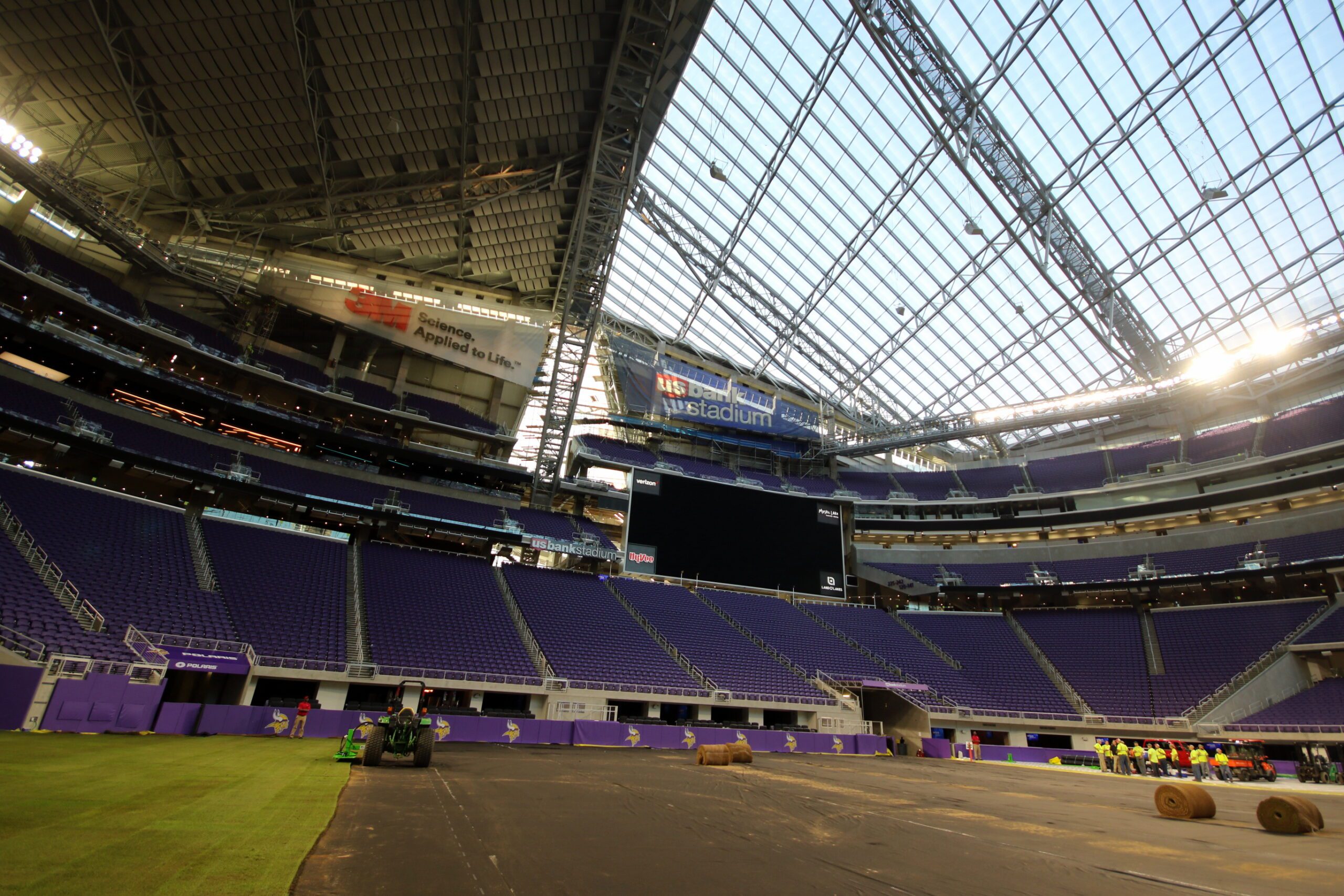
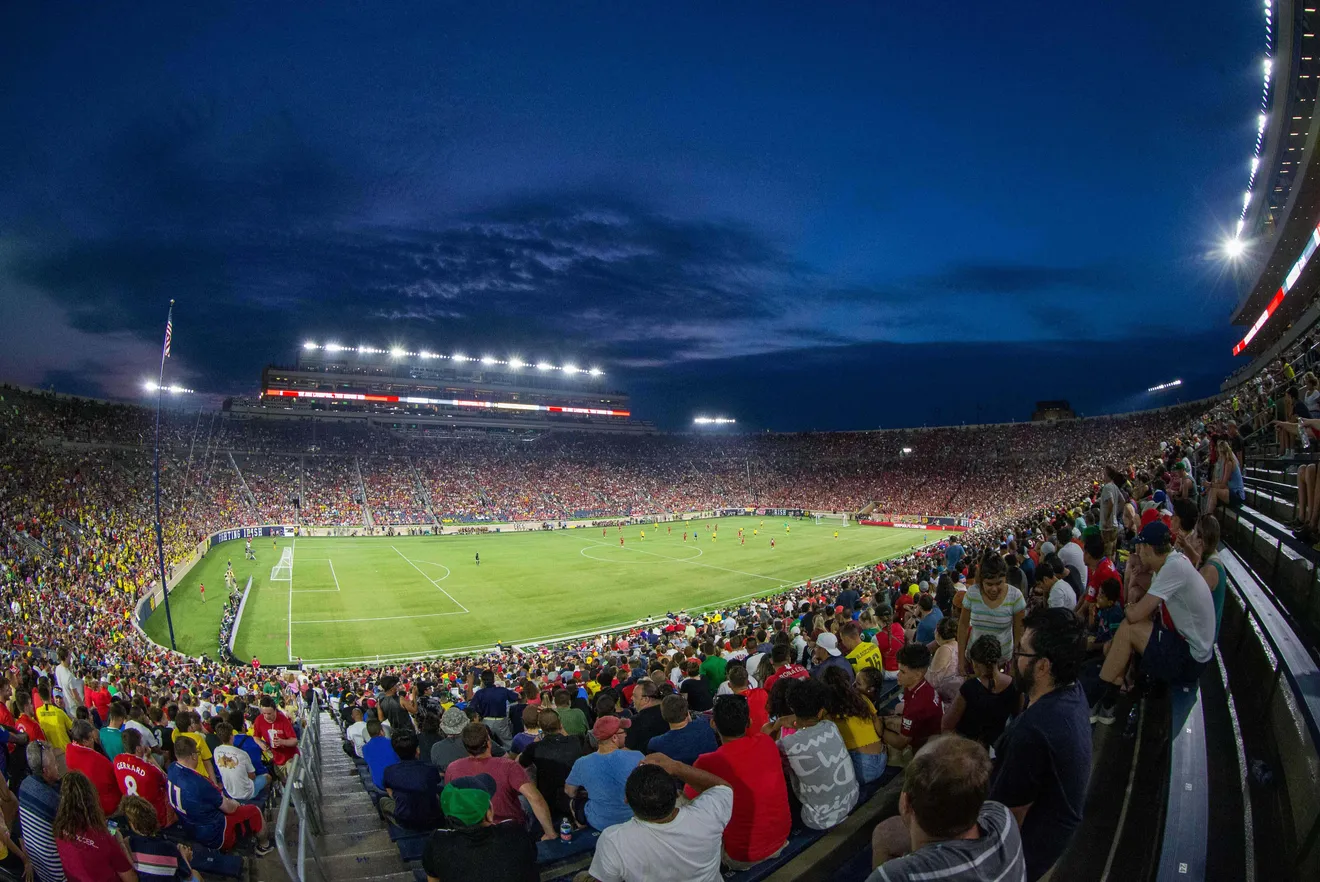
Football Field Turf/Grass — Portfolio & Case Studies
Frequently Asked Football Field Turf Questions
How much does football turf cost?
Installed cost depends on scope — full field vs practice turf, drainage/base repairs, shock pad, infill choice, and field accessories. Request a site visit for a firm estimate and a 10–15 year lifecycle cost model.
How long does a football turf field last?
With proper maintenance, synthetic football systems typically last 8–15+ years. Heavy use, poor infill management, or neglect shortens service life; scheduled O&M extends it. (pure.psu.edu)
What is Gmax and what should it be for a football field?
Gmax measures surface hardness / impact attenuation; lower is softer. ASTM sets an upper measurement limit used in testing, while industry groups (and many owners) target more conservative values and annual testing to manage safety. We perform annual Gmax testing per ASTM and STMA guidance. (standards.iteh.ai)
Are turf fields hotter than grass?
Yes: synthetic fields can have higher surface temperatures on sunny days. Cooling strategies include irrigation cooldowns, shade structures, reflective infill, or scheduling play outside peak heat times.
Is turf safe for players compared with natural grass?
Safety depends on system design, maintenance and testing. Properly installed and maintained synthetic systems with appropriate infill and shock pads perform within safety testing guidelines; owners should plan for annual testing and O&M. (See STMA and Penn State guidance on testing and surface hardness.) (stma.org)
Can NFL stadiums use artificial turf?
Yes — NFL stadiums use both natural grass and high‑end synthetic systems; any pro‑level change requires coordination with league/stadium consultants and must meet stadium standards.
How long does installation take?
Typical timeline for a prepared site: 3–6 weeks for a turf install. Full reconstructs with subsurface drainage or complex site issues take longer. We provide a project schedule with every proposal.
Do you offer hybrid systems (natural + synthetic)?
Yes — common hybrid options include reinforced natural surfaces, sod outfields with synthetic infields, or hybrid fiber reinforcement for natural turf. These are popular where owners want natural feel plus increased durability.
What infill options do you offer?
Crumb rubber, TPE, coated sand, and organic blends (cork). We provide pros/cons, cost implications, and third‑party material safety data on request.
How often should a turf field be tested?
Industry practice is annual testing for Gmax and drainage, plus post‑event checks after heavy storms. Penn State and STMA research recommend routine inspections and testing to monitor field hardness and infill depth. (plantscience.psu.edu)
How do you remove snow without damaging turf?
Use rubber‑edged pushers, low‑profile blowers, or soft brushes. Avoid metal blades and heavy scraping. For extended snow cover consider fabric covers or staged removal plans.
What warranties are typical?
Turf warranties commonly cover manufacturing defects, UV fade and backing delamination; lifespans and prorated replacement schedules vary by system and vendor. We include warranty details in every contract.
More About Bush Sports Turf Services
Bush Sports Turf was founded in 1992 as a sports turf company offering football field turf installation and has continued to offer the best natural sod, artificial turf, field construction, field renovation, field conversion, field optimization, and field consultation services, and more for decades in the Midwest US area (including but not limited to Illinois, Indiana, Iowa, Michigan, Minnesota, Missouri, & Wisconsin). Bush Sports Turf has an agronomist on staff, a Certified Sports Field Manager (CSFM), a Certified Professional in Erosion Control and is proud to be a part of the National, Illinois, & Iowa Chapters of the Sports Turf Managers Association, as well as a part of the United States Golf Association and the International Erosion Control Association. Bush Turf has won multiple awards over the years, including the Golden Cleat Award from the Iowa Sports Turf Managers Association, Certified Field Builder, American Sports Builders Association, and both State and National Field of the Year awards. Bush Sports Turf has acquired both “Florida Golf Course Company” & “Below the Turf”. Give us a call and we’ll help you identify how we can best care for your field and those whole will be using the field.
Business Address: 6800 78th Ave W, Milan, IL 61264
Business Phone: +13097872676
Business Hours: Monday – Friday, 7am – 5pm
Football Field Turf Company Reviews:
See why we are the top football field turf company
Google Reviews
Facebook Reviews
You may have found us by searching for some other common Football Field Turf services:
Sports Field Construction
Sports Field Renovation
Sports Field Conversion
Sports Field Optimization
Sports Field Consulting
Some of the areas we’ve served:
Illinois Turf
Indiana Turf
Iowa Turf
Michigan Turf
Minnesota Turf
Missouri Turf
Wisconsin Turf