BUSH SPORTS TURF Services
Bush Sports Turf proudly serves professional fields, colleges, K–12 schools, municipalities, clubs, turf managers, business owners, & parks and rec organizations.
Construction
Renovation
Conversion
Optimization
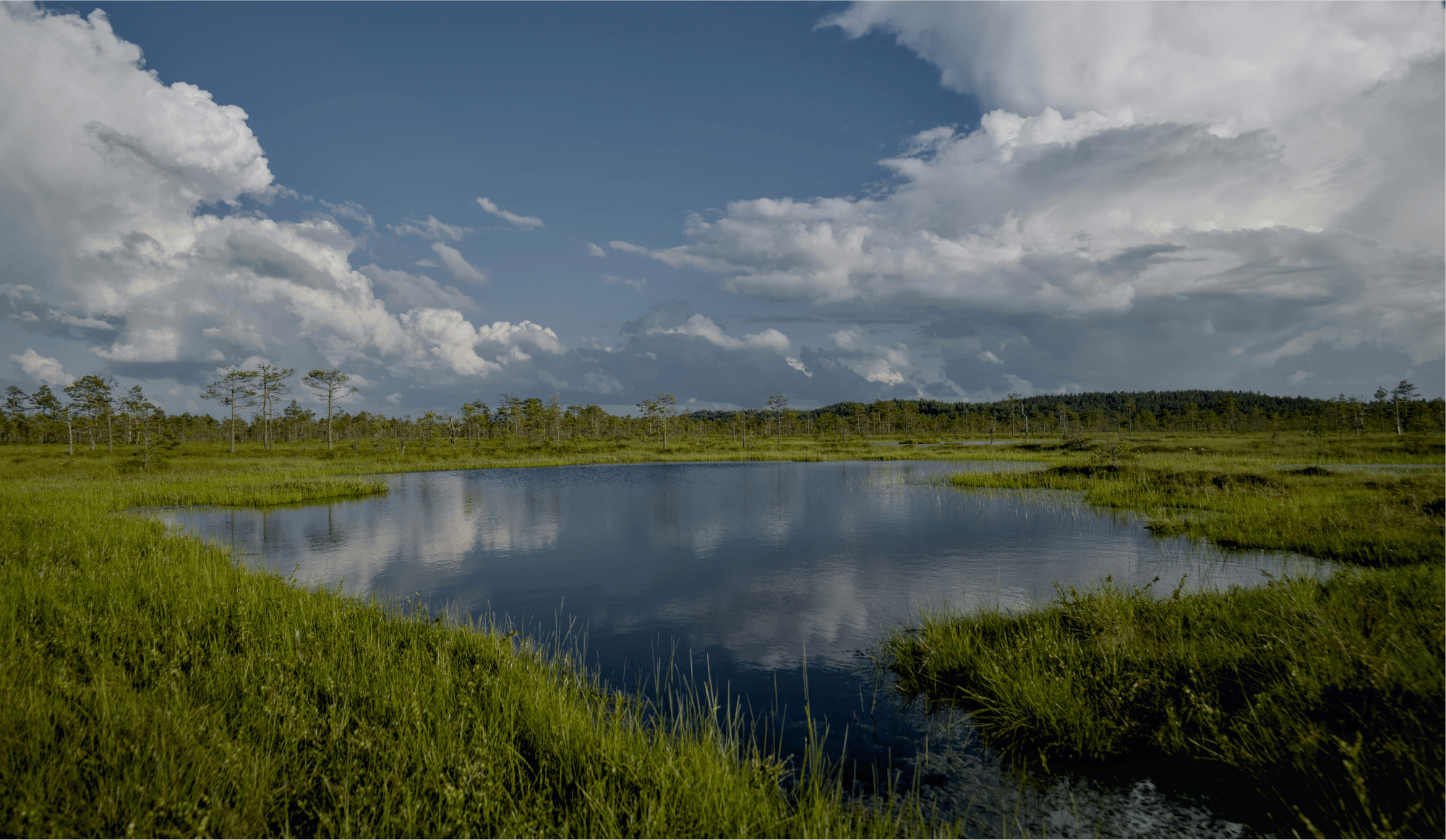
Environmental restoration restores ecosystem function, habitat and community benefits on degraded or contaminated sites. We bridge remediation and restoration: working with owners, regulators and community stakeholders to develop restoration objectives, integrate restoration into cleanup/redevelopment projects, design resilient habitat and hydrology solutions, and provide construction oversight and multi‑year monitoring to measure success. Our team combines ecological design, permitting experience, agronomy/soil science and project delivery so restoration outcomes support biodiversity, water quality and long‑term site reuse. (SER defines ecological restoration as assisting recovery of ecosystems; federal restoration practice frames restoration as the step that follows remediation toward revitalization.) (ser-rrc.org)
Who hires environmental restoration services?
- Public agencies (parks, DOTs, municipal stormwater programs) seeking habitat, wetland or stream restoration. (iwr.usace.army.mil)
- School districts, universities and developers integrating restoration into site redevelopment and brownfield revitalization. (epa.gov)
- Industrial or former industrial site owners needing restoration as part of remediation and reuse (Superfund, RCRA, brownfields). (epa.gov)
What we deliver
Feasibility & alternatives analysis
Wetland/stream delineation coordination, habitat baseline surveys, hydrologic and water‑balance modeling, cultural & stakeholder screening, and comparative alternatives (avoid/minimize/compensate). Deliverable: feasibility memo with recommended pathway and preliminary scope & budget. (iwr.usace.army.mil)
Restoration planning & design (native habitat, wetlands, riparian zones, prairie and forest)
Site‑specific design that matches reference conditions and realistic performance goals: grading & microtopography, substrate amendments, native species palettes, planting density, erosion control, and maintenance staging. Deliverable: design drawings, planting lists, specification text and construction sequencing. (ser-rrc.org)
Remediation integration & construction oversight
Coordinate with environmental remediation contractors (soil handling, capping, amendments, engineered media) and provide hold‑point inspections for planting, grading, and hydrologic controls. Deliverable: field observation reports, as‑built drawings and QA/QC documentation. (epa.gov)
Permitting & regulatory coordination
Prepare or support permit applications (USACE 404, state water quality 401, state natural resources permits, local ordinances) and work with mitigation banks or in‑lieu fee programs when appropriate. Deliverable: permit submittal packages and agency coordination record. (iwr.usace.army.mil)
Monitoring & adaptive management (multi‑year)
Site monitoring protocols tied to success criteria (vegetative cover, species composition, hydrologic regime), annual reporting, and a staged corrective action plan if performance thresholds are not met. Deliverable: monitoring reports with photographic record, data tables and recommended actions. SER and federal project reports emphasize monitoring and adaptive management as essential. (ser-rrc.org)
Typical deliverables owners expect
- Feasibility memo and alternative screening.
- Full restoration design package (plans, specifications, planting palettes).
- Construction oversight reports and as‑built drawings.
- Monitoring plan with explicit performance criteria and annual reporting schedule.
- Maintenance transition plan and training for onsite crews or contractors. (iwr.usace.army.mil)
Project examples & measurable outcomes
Short project callouts (insert 2–3 Bush Sports Turf case studies here — include objectives, size, solutions implemented, and measurable outcomes such as restored acreage, percent native cover at year 3, or improved pollutant removal metrics). (Example formats for case pages are used by EPA and SER case libraries.) (epa.gov)
Midwest climate & site considerations (IL, IN, IA, WI, MO, MI)
Cold‑climate species selection, planting windows (spring/fall), frost protection, and hydrologic design that accounts for spring snowmelt and freeze‑thaw cycles. We tailor substrate and planting strategies to local soils and precipitation regimes to improve establishment success and reduce winter dieback. (en.wikipedia.org)
Typical timeline & cost drivers
- Feasibility & permitting: 2–6 months (permit complexity varies).
- Design & contracting: 4–12 weeks to produce construction documents; staged work may be scheduled by seasons.
- Construction: weeks to months depending on earthwork and planting scale.
- Monitoring: commonly 3–5 years minimum for performance verification (some projects require longer monitoring per permits). Cost drivers: earthwork volumes, hydrologic structures, size of planting area, invasive species control needs, and monitoring duration. (iwr.usace.army.mil)
Frequently asked questions
What’s the difference between remediation and restoration?
Remediation addresses pollution or contamination (removal/treatment of hazardous materials). Restoration is the ecological work that follows (or runs in parallel) to recover ecosystem function, habitat and services for long‑term use and community benefit. Federal programs often combine both steps in a Revitalization framework. (epa.gov)
How do you measure restoration success?
Success is measured against agreed performance criteria (e.g., percent native cover, target species establishment, hydrologic regime match). Monitoring, documentation and adaptive management are essential to demonstrate compliance and ecological outcomes. SER and government project reports define commonly used success metrics. (ser-rrc.org)
Can restoration be part of a sports field or park redevelopment?
Yes — restoration can be integrated into redevelopment to improve habitat, control stormwater and create multi‑benefit open spaces. Excavated soils from wetland creation can sometimes be reused to raise playing surfaces, reducing haul costs while meeting mitigation goals (examples: park projects that combined wetlands and athletic fields). (iwr.usace.army.mil)
More About Bush Sports Turf Services
[keyword] Company Reviews:
See why we are the top [keyword] company in [city]. Google Reviews: [location_google_reviews] Facebook Reviews: [location_facebook_reviews] Yelp Reviews: [location_yelp_reviews] Angie’s List: [location_angies_list] Home Advisor: [location_home_advisor] BBB Reviews: [location_bbb_reviews][reviews]You may have found us by searching for some other common [keyword] services:[gbp_business_category_1] [city] [state]
[gbp_business_category_2] [city] [state]
[gbp_business_category_3] [city] [state]
[gbp_business_category_4] [city] [state]
[gbp_business_category_5] [city] [state]
Some of our other important [keyword] pages:[product_page_1] [city]
[product_page_2] [city]
[product_page_3] [city]
[product_page_4] [city]
[product_page_5] [city]
[service_page_1] [city]
[service_page_2] [city]
[service_page_3] [city]
[service_page_4] [city]
[service_page_5] [city]
Counties [city] is in/near: [countylistfull]Cities near [city]: [citylistfull]Zip Codes in/near [city]: [zip_code_full]Neighborhoods in/near [city]: [neighborhood_list_full]