BUSH SPORTS TURF Services
Bush Sports Turf proudly serves professional fields, colleges, K–12 schools, municipalities, clubs, turf managers, business owners, & parks and rec organizations.
Construction
Renovation
Conversion
Optimization
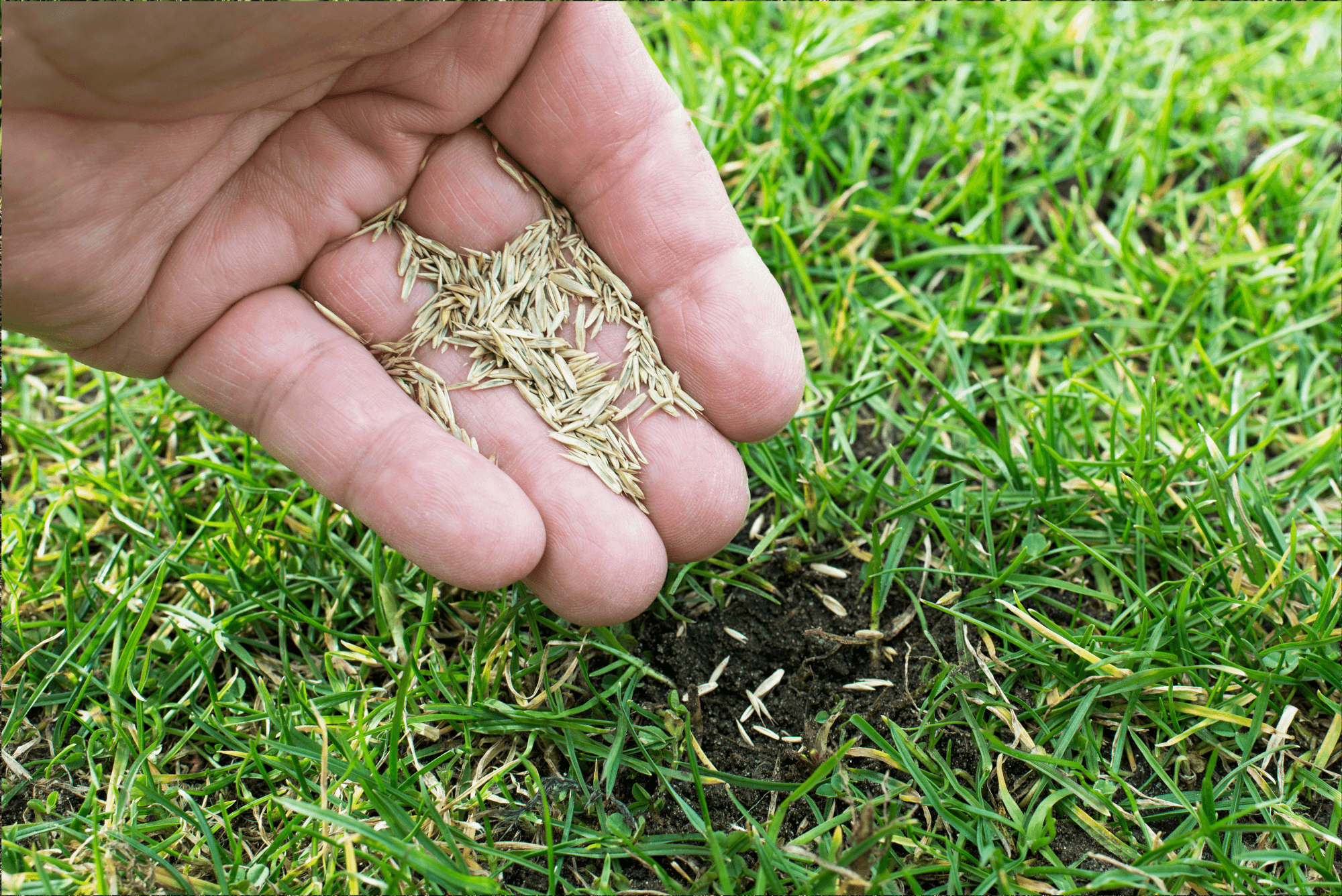
Whether you’re renovating worn high‑use areas, overseeding to maintain density, or establishing a new natural turf field from seed, a successful seeding program balances seed selection, timing, soil preparation, and irrigation. Bush Sports Turf delivers seeding programs tailored to Midwest climates and budgets: species & cultivar selection, seedbed prep (aeration/verticut/slit), calibrated seeding (drill, slit, broadcast, hydroseed), topdressing, and a documented establishment plan with follow‑up visits and irrigation tuning. Our agronomist recommends seeding windows, rates and methods based on field construction (native vs sand cap), use levels and irrigation capability.
Who this service is for
- K–12 athletic directors and maintenance crews
- Colleges & universities and athletic departments
- Municipal parks & recreation departments
- Clubs, multi‑sport complexes and commercial developers
Why professional seeding matters
- Restores turf density and playability in high‑wear areas. (turfmagazine.com)
- Reduces weed invasion and improves surface safety (safesportsfields.cals.cornell.edu)
- Optimizes seed‑to‑soil contact and germination through proper prep and irrigation. (plantscience.psu.edu)
- Lowers lifecycle cost vs repeated spot repairs by establishing a uniform, maintainable stand. (safesportsfields.cals.cornell.edu)
Our seeding services
Overseeding & spot repair (high‑use areas)
What we do: Core aeration or slit seeding followed by calibrated seed application, light topdressing, and frequent initial irrigation. We target goal mouths, center‑field wear lanes and other hotspots.
Deliverables: before/after photos, seeding map, seeding rates and an establishment log. (safesportsfields.cals.cornell.edu)
H3: Full field renovation seeding (seed‑only rebuilds)
What we do: Millimeter‑grade grading (if needed), seedbed prep, broadcast/drill seeding or hydroseeding, rolling/topdressing, and irrigation commissioning. Deliverables: seed mix spec, seeding rate, germination timeline, and crew training to follow the establishment SOP. (plantscience.psu.edu)
Slit seeding/drill seeding (best for dense stands)
What we do: Vertical slitting or drill placement to deposit seed into the soil without removing major turf; ideal when you need seed‑to‑soil contact without full renovation.
Deliverables: map of slit lines, seeding rate per zone, germination checks and follow‑up visits. (turfmagazine.com)
Hydroseeding (fast coverage for large new areas)
What we do: Hydroseed blends (seed + tackifier + mulch + fertilizer) for large, open fields or graded sites; we calibrate mixes for erosion control and germination.
Deliverables: mix recipe, application rate, erosion control guidance and irrigation schedule. (turfmagazine.com)
Pregerminated & divot mix options
What we do: Pregerminated seed or prepped divot mixes for rapid cover in high‑impact zones.
Deliverables: pregermination protocol, divot mix recipe and on‑site crew coordination. (turfmagazine.com)
Seeding rates, species selection & timing
Seeding windows (Midwest focus): late summer/early fall is generally best for cool‑season seed establishment; mid‑August through mid‑September is a common ideal window for many cool‑season mixes in northern climates. For dormant seeding or spring windows consult our agronomist for site‑specific timing. (safesportsfields.cals.cornell.edu)
Example seeding rates (pure live seed basis / common guidance): perennial ryegrass 8–15 lb/1,000 ft2 for aggressive overseeding; Kentucky bluegrass 2.5–3.5 lb/1,000 ft2 when used for full stands or blends; tall fescue 6–12 lb/1,000 ft2 depending on cultivar and use. (We calculate rates on pure, live seed and seed count.) (safesportsfields.cals.cornell.edu)
Species selection: choose cultivars with proven wear tolerance, quick establishment and disease resistance. Perennial ryegrass for rapid cover; Kentucky bluegrass blends for long‑term density; tall fescue for drought resilience where irrigation is limited. Our agronomist recommends local cultivar selections (NTEP data referenced). (turfmagazine.com)
Preparation, equipment & irrigation
Prep: mow low, core aerate (20–40 holes/ft2 where practical), remove debris, verticut or dethatch as required, and lightly rake to create good seedbed contact. (safesportsfields.cals.cornell.edu)
Equipment: slit seeders, drill seeders, broadcast spreaders, hydroseeding rigs, mat drags, rollers and calibrated spreaders for precise rates. (turfmagazine.com)
Irrigation: frequent light cycles until emergence, then progressively deeper watering to encourage root development; we commission/adjust irrigation schedules as part of the establishment plan. (plantscience.psu.edu)
Establishment & quality assurance
Deliverables: written establishment plan, seeding map & rate breakdown, photographic progress logs, germination checks, and a final acceptance report.
Warranty & follow-up: we offer time‑bound establishment support visits (e.g., 3–4 visits within first 8 weeks) and optional seasonal maintenance contracts to protect your investment.
Midwest climate & scheduling notes (IL / IN / IA / WI / MO / MI)
Late‑summer/fall seeding is generally optimal for cool‑season mixes; avoid seed establishment during prolonged heat/drought or freeze/thaw windows. We provide a region‑specific schedule and will advise on dormant seeding strategies for early spring results. (safesportsfields.cals.cornell.edu)
Typical project timeline & pricing factors
Localized overseed (hotspots): 1 day on site; report & follow‑up schedule provided.
Full field seeding (establishment): 1–3 days on site for seeding operations; establishment 2–12 weeks depending on method and weather.
Pricing depends on seed mix choice, seeding method (slit, drill, hydroseed), irrigation needs, and follow‑up support. We provide a free site assessment and a written proposal with line‑item pricing.
Frequently Asked Questions
Can we seed without irrigation?
Successful germination without irrigation depends on local rainfall and soil type; we recommend irrigation for reliable establishment, but we’ll advise drought‑tolerant mixes and dormant seeding options if irrigation isn’t possible. (plantscience.psu.edu)
How soon after seeding can the field be used?
That depends on species and method: perennial ryegrass may germinate in 4–10 days with ideal conditions; full traffic should be limited until seedlings have sufficient root mass (often several weeks). We provide a site‑specific playability timeline. (turfmagazine.com)
What’s the difference between slit seeding and broadcast seed?
Slit seeding deposits seed into a small slot — better seed‑to‑soil contact and higher germination in dense stands; broadcast is faster but works best after aeration or when followed by mat dragging/topdressing. (turfmagazine.com)
More About Bush Sports Turf Services
[keyword] Company Reviews:
See why we are the top [keyword] company in [city]. Google Reviews: [location_google_reviews] Facebook Reviews: [location_facebook_reviews] Yelp Reviews: [location_yelp_reviews] Angie’s List: [location_angies_list] Home Advisor: [location_home_advisor] BBB Reviews: [location_bbb_reviews][reviews]You may have found us by searching for some other common [keyword] services:[gbp_business_category_1] [city] [state]
[gbp_business_category_2] [city] [state]
[gbp_business_category_3] [city] [state]
[gbp_business_category_4] [city] [state]
[gbp_business_category_5] [city] [state]
Some of our other important [keyword] pages:[product_page_1] [city]
[product_page_2] [city]
[product_page_3] [city]
[product_page_4] [city]
[product_page_5] [city]
[service_page_1] [city]
[service_page_2] [city]
[service_page_3] [city]
[service_page_4] [city]
[service_page_5] [city]
Counties [city] is in/near: [countylistfull]Cities near [city]: [citylistfull]Zip Codes in/near [city]: [zip_code_full]Neighborhoods in/near [city]: [neighborhood_list_full]